

The Sea View Was Beautiful. The Room Still Felt Wrong.
From the outside, this apartment had everything going for it.
A modern building.
A beautiful coastal setting.
The kind of view people assume must make a room feel special all on its own.
And yet, inside, it still felt a little flat.
Not awful. Not badly done. Not one of those dramatic before stories where everything is clearly crying out for help.
It was more frustrating than that.
Because on paper, it all looked perfectly fine.
But in real life, it did not feel calm enough. Or considered enough. Or connected enough to the building it sat in, or the sea just beyond the glass.
It felt like a room that had been furnished.
Not a room that had been fully thought through.
And that difference matters more than most people realise.
When a Room Looks Fine but Still Feels Wrong
This is often the hardest kind of space to explain.
If a room is obviously outdated, most people can see the problem straight away. But when a room looks “fine”, it can leave you stuck in a much more irritating place. You know something is off, but you cannot always point to one dramatic reason why.
You just keep noticing it.
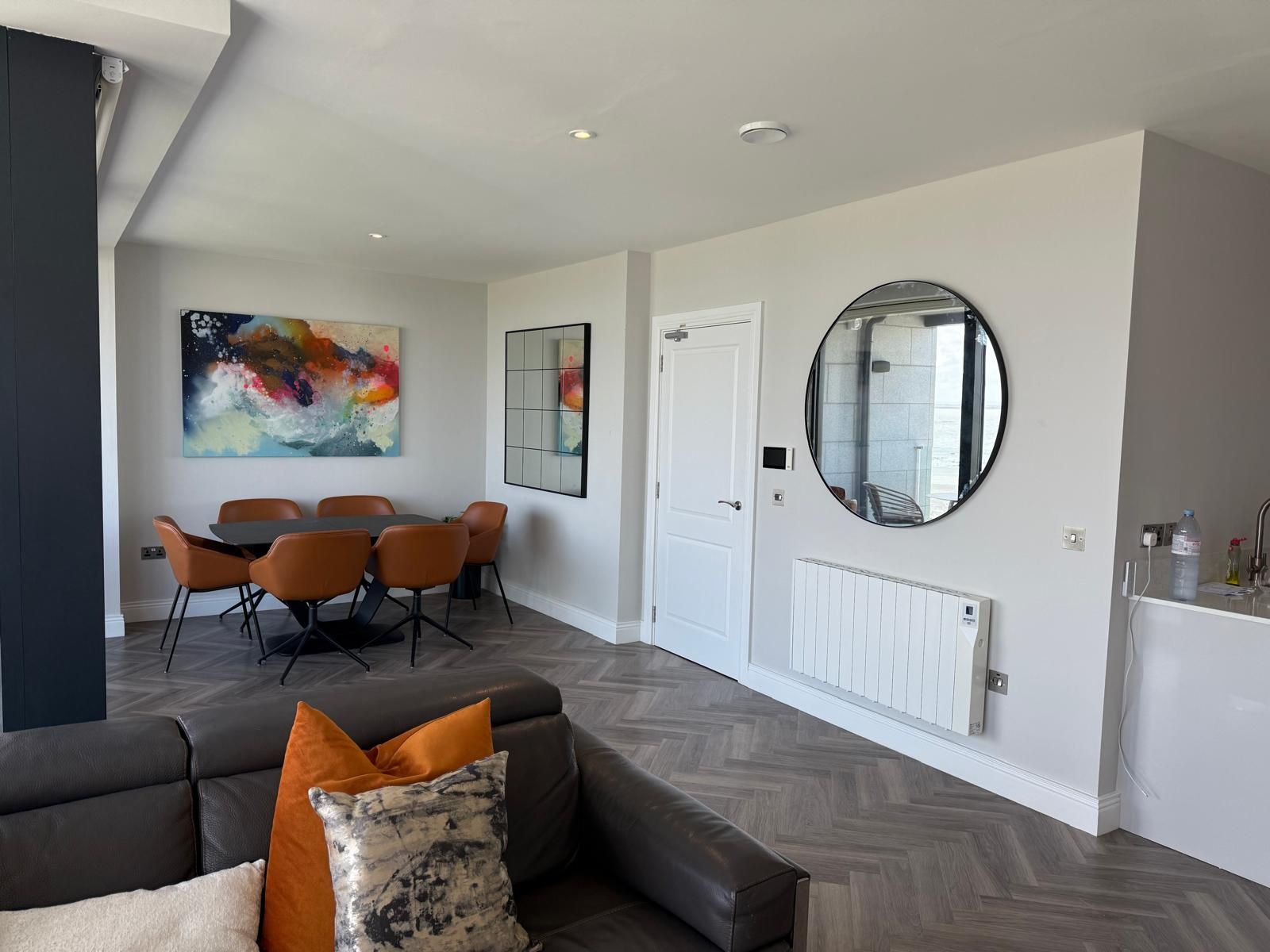
You notice that the dining area does not quite sit comfortably in the room.
You notice that the TV wall works, technically, but does not really give the space any presence.
You notice that nothing feels especially terrible, and yet nothing feels properly resolved either.
That is the sort of frustration that quietly wears people down.
Because the room is close enough to good that you start questioning yourself.
Maybe I am being picky.
Maybe it is fine.
Maybe I should just leave it.
Maybe I am the problem.
In my experience, that is rarely true.
Usually, the room is simply missing the things that make it feel grounded, intentional and emotionally settled.
The Dining Area Was the First Clue
The dining area looked fine in isolation.
The furniture was there. The artwork was there. Nothing looked disastrous. But it did not feel in sync with the modern architecture of the apartment or the softness of the coastal setting outside.
That matters.
A room does not exist on its own. It is always in conversation with the building around it, the light it receives, the view beyond it, and the atmosphere you want to feel when you live there.
In this case, the dining area felt slightly disconnected from all of that.
It needed more calm.
More cohesion.
More of a sense of place.
So the first move was not to add more “things.” It was to create a stronger backdrop.
A darker wall immediately changed the feeling of the space. The dining area stopped floating visually and started to feel anchored. It had weight. It had contrast. It had somewhere to belong.
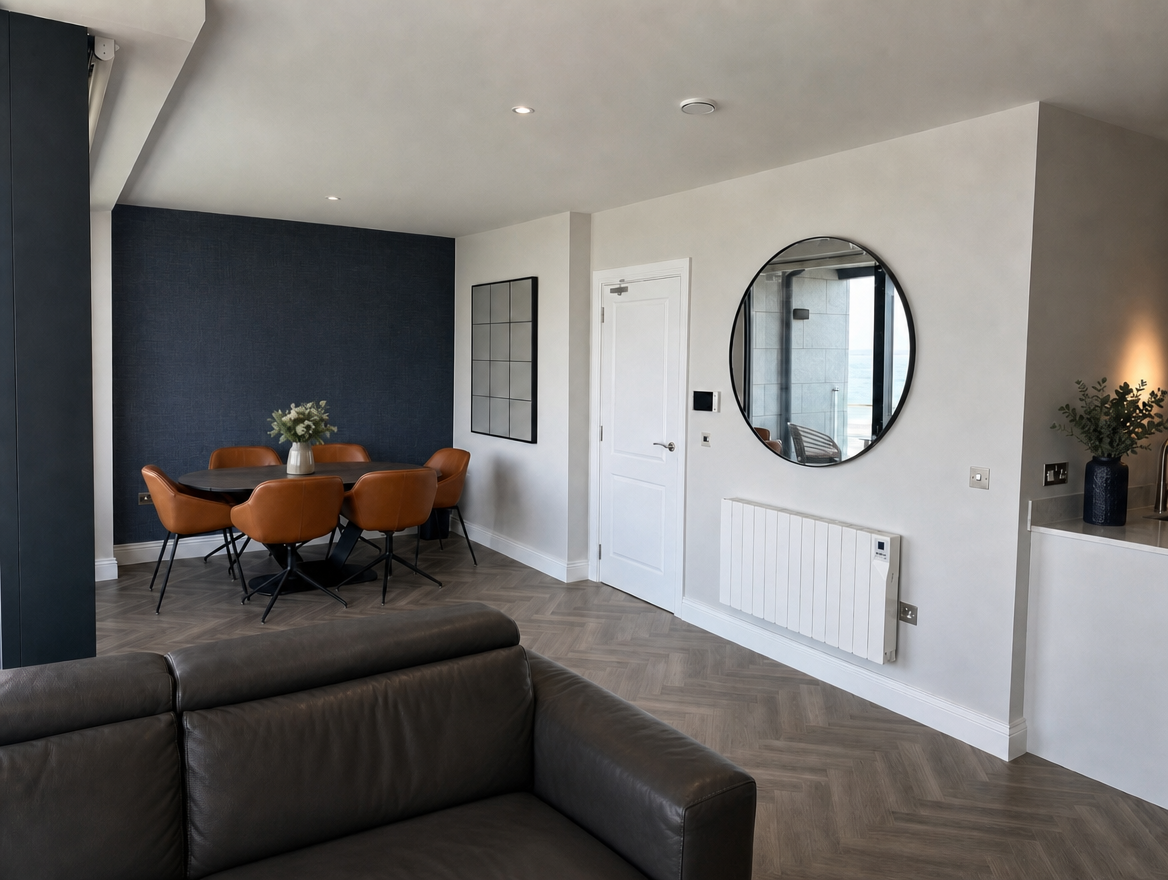
This is one of those details people often underestimate. A wall colour or wall finish is never just about colour. It is about what the eye can rest against. It is about whether the furniture feels supported or left to fend for itself.
Once that darker backdrop was in place, the room felt calmer straight away.
Then Came the Layering
That was the point where the room stopped feeling random and started feeling intentional.
From there, the layering mattered just as much.
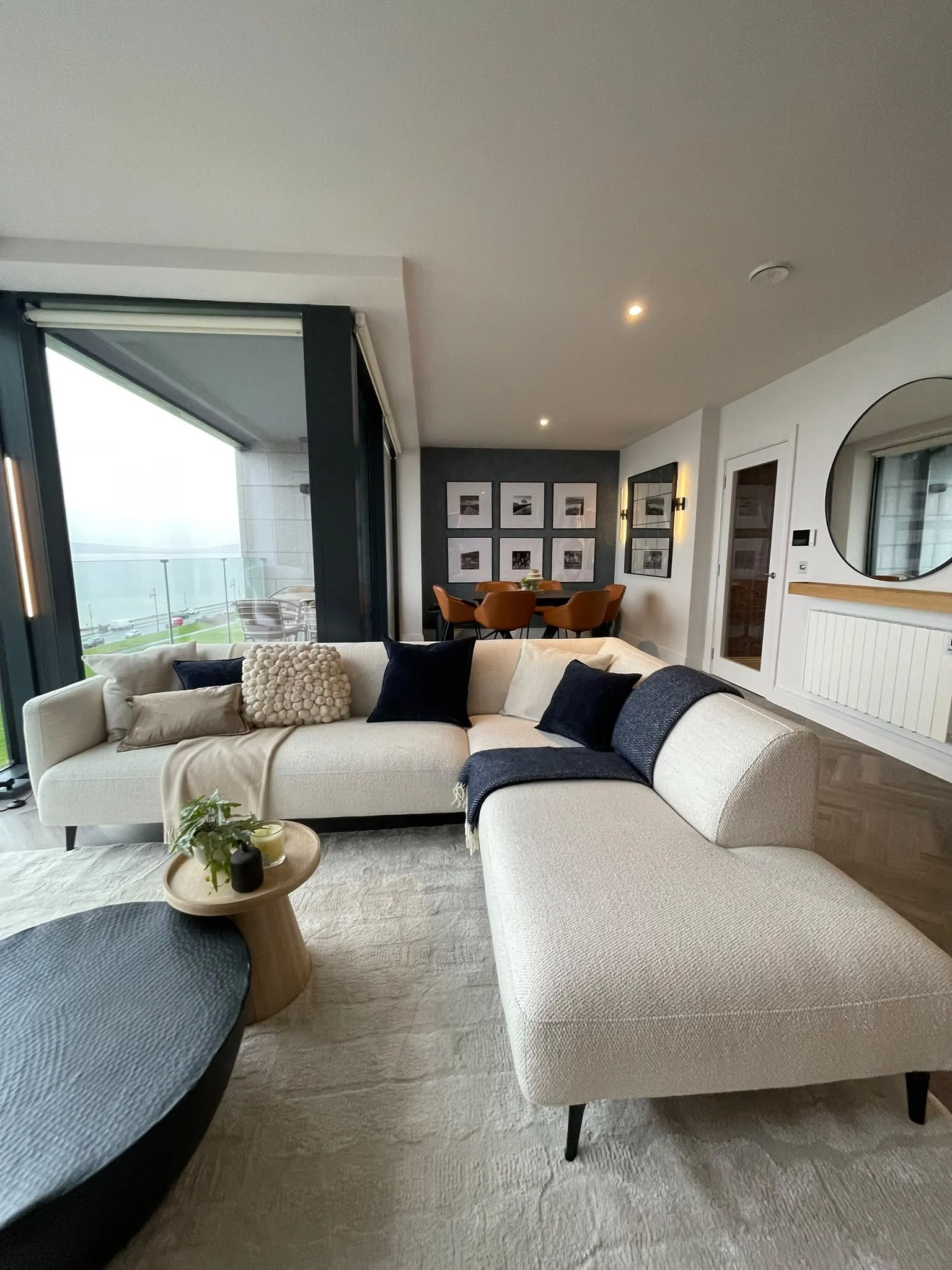
Artwork gave the wall rhythm.
Lighting gave it atmosphere.
Styling softened the whole picture and made it feel lived in, rather than arranged for the sake of appearance.
This is where a lot of rooms either come together beautifully or fall slightly flat.
Because a room can have the right furniture and still lack depth.
It can have a decent colour palette and still feel emotionally blank.
It can be perfectly nice and still not make you exhale when you walk in.
What brings a room to life is often the interplay between practical structure and softer detail.
It is the moment when the room starts to feel designed, not just furnished.
The TV Wall Had the Same Problem
The TV area was dealing with a very similar issue.
Again, it was not terrible. It simply sat too low visually, which meant the room still felt flatter and more unfinished than it should have.
That is something I notice a lot in newer homes and apartments.
Everything happens close to floor level.
Low units. Low visual weight. Low emphasis.
And then people wonder why the room does not feel complete.
The answer is often that the eye has nowhere strong enough to land.
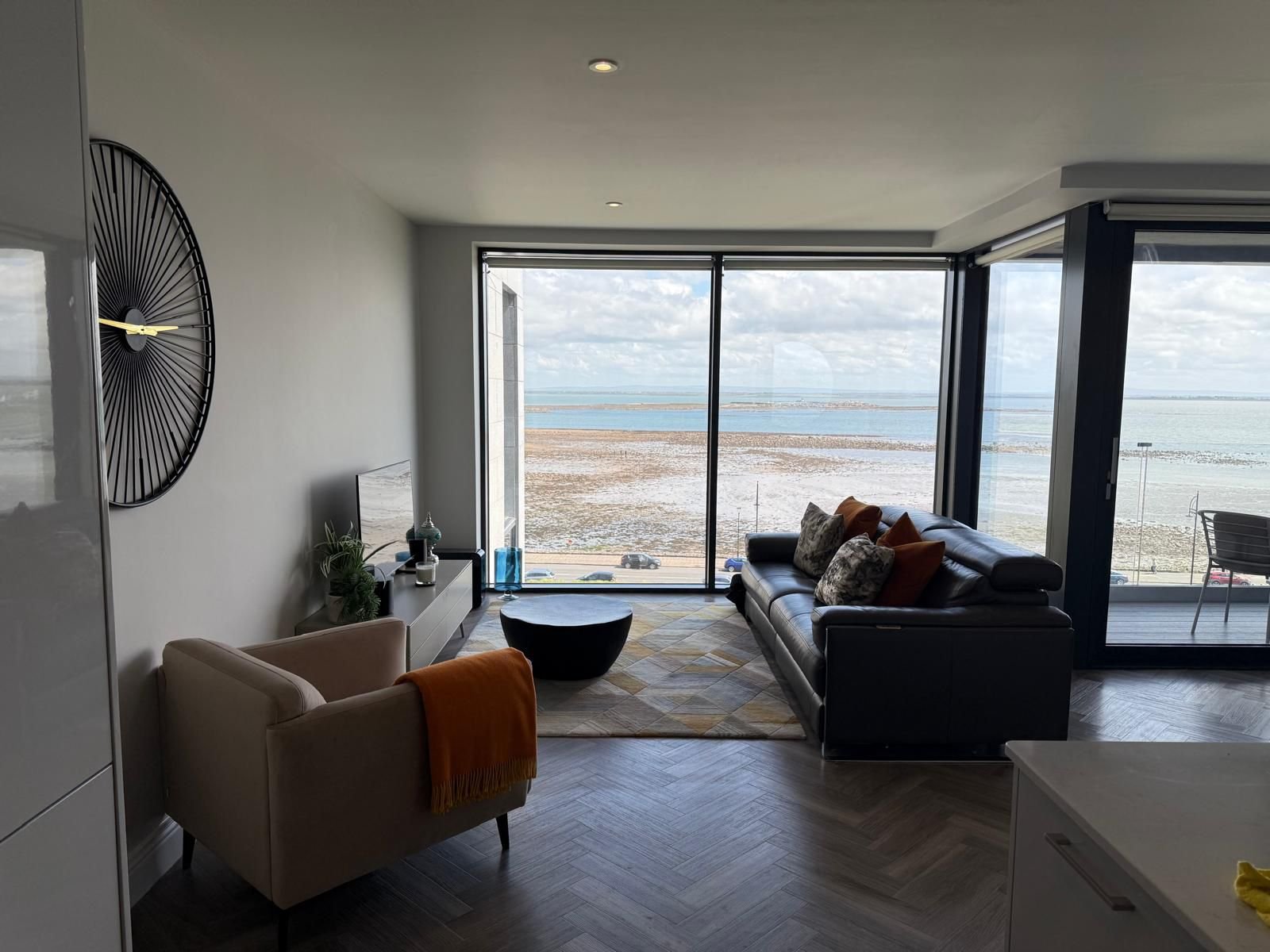
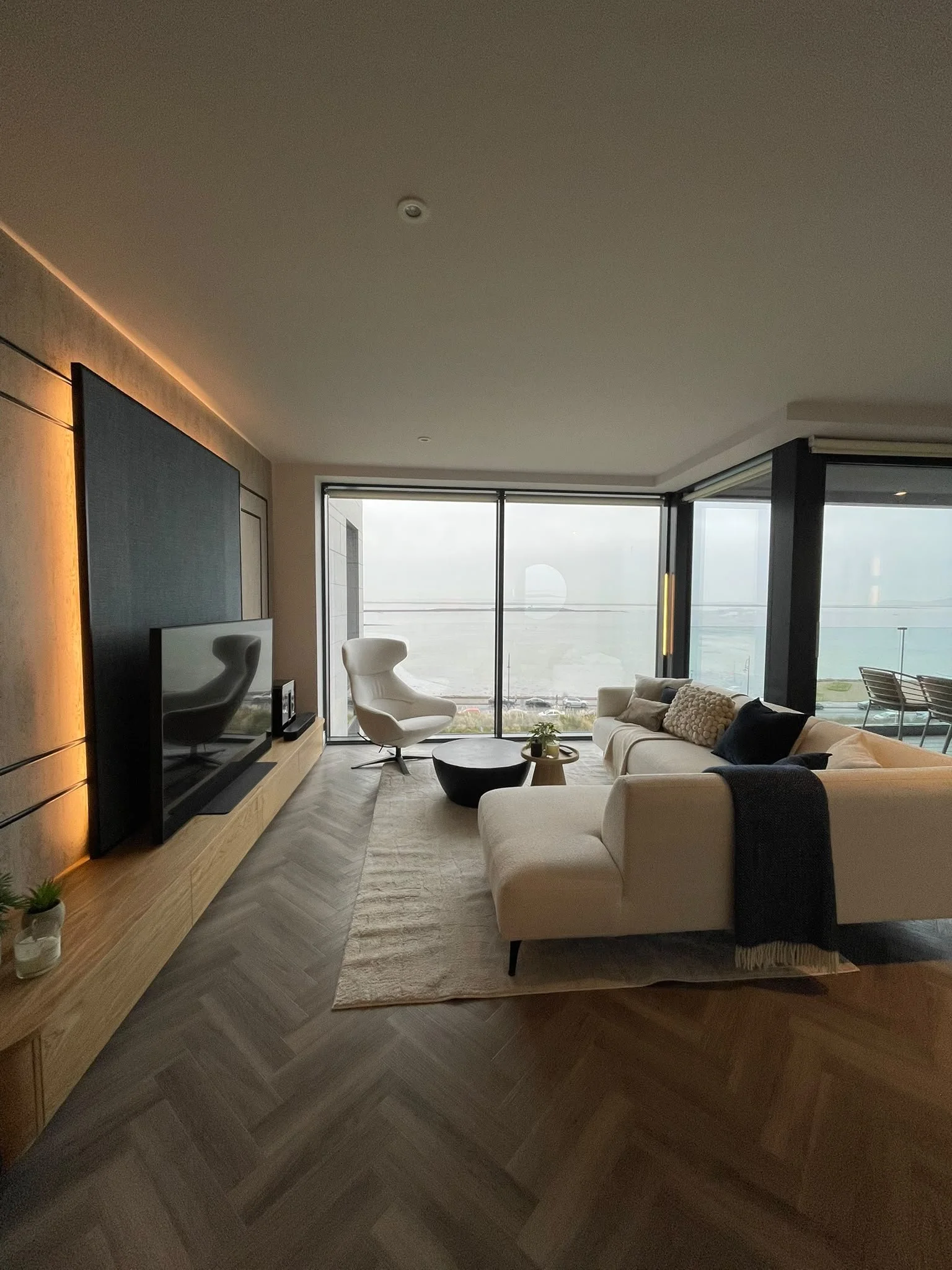
In this apartment, the TV wall needed more than function. It needed presence.
The first change was the oak curved unit.
That one move brought in warmth immediately. It softened the sharper edges in the room, added a more thoughtful material contrast, and created a stronger visual base for the TV area to sit on.
It still felt clean and modern, which was important. This apartment did not need clutter or fuss or decorative noise. But it did need warmth, and in a modern home, warmth usually comes from materiality rather than excess.
That oak element made the room feel more resolved almost instantly.
The Final Step Was Giving the Room a Proper Focal Point
Once the base had more strength, the full feature wall could do its job.
This is where the room really changed.
Suddenly, the eye had somewhere to go.
The TV wall no longer felt like an object against a plain wall.
It became part of a composition.
And that changes everything.
A room starts to feel complete when the larger visual relationships make sense. When the height, balance, texture and contrast all begin working together instead of existing as separate parts.
That is also where the apartment finally began to feel more connected to its location.
Because while the architecture was modern and clean, the interior needed a little more softness and emotional ease. I did not want to fight the building. I wanted to work with it, and then soften it.
So throughout the space, I introduced subtler references to the sea.
Not in an obvious, themed way. Nothing literal. Nothing gimmicky.
Just the gentler repetition of curved details, slightly softer lines, and blue used in a way that felt grounded rather than decorative.
That gave the apartment more of a relationship with what was outside its windows.
And that relationship is what helped the whole space feel calmer.

This Is What Good Design Really Solves
People often assume interior design is mainly about choosing beautiful things.
Of course beauty matters. It matters a great deal. But for most of my clients, that is not the full story.
The real problem is usually deeper than that.
It is the mental drag of living with a room that never quite settles.
It is the low-level irritation of seeing the same awkward corner or unfinished wall every day.
It is second-guessing whether to leave it, redo it, buy something else, move something again, or just stop caring.
That sort of visual and mental friction takes up more energy than people think.
A well-designed room gives some of that energy back.
It removes the feeling that you still need to fix something.
It makes decisions feel finished.
It makes the home easier to enjoy.
It lets the room support your life rather than quietly niggle at you in the background.
That is why design is never just aesthetic to me.
It is about peace of mind.
It is about emotional ease.
It is about making a home feel as good to live in as it looks in photographs.
The Difference in the End
By the time this room was finished, it still felt modern.
Still clean. Still considered. Still true to the apartment.
But now it also felt warmer. Softer. More grounded. More complete.
The dining area had presence.
The TV wall had structure.
The room finally had places for the eye to rest and reasons for the whole scheme to make sense together.
Most importantly, it no longer felt like a collection of separate choices.
It felt connected.
And often, that is the real transformation people are responding to, even if they do not have the design language for it.
Not just “it looks nicer now.”
But:
It feels calmer now.
It feels easier now.
It feels finished now.
It feels like somewhere I actually want to be.
That is always the goal.
Thinking About Your Own Space?
If your room looks fine on paper but still does not feel right in real life, there is usually a reason.
Often, it is not about starting again.
It is about seeing what the space is missing — and knowing how to fix it properly.
You can see more of my work and read more great tips on the blog.